
Gigabyte X670e Aorus Master - Problems with Install Boot
- Thread starter Caldir
- Start date
-
Hello Guest. Before you post check the Troubleshooting guide here, Dortania Troubleshooting
You are using an out of date browser. It may not display this or other websites correctly.
You should upgrade or use an alternative browser.
You should upgrade or use an alternative browser.

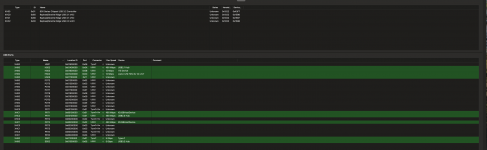
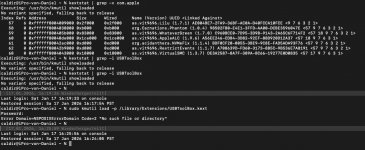
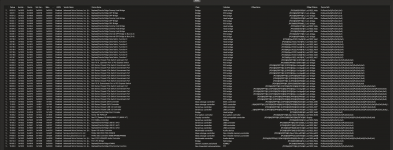

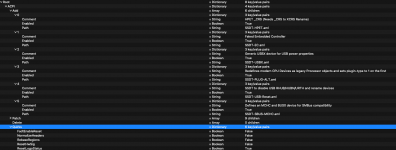
the PCI Devices are correct ? Or have to Delete the 1st with acpi-path ?
maybe i need remap my USB again or something is wrong.
your APCI settings also replace with my settings.
patches_OC.plist into my info info.plist
By the way i still need the USBTool Kext + Mapping ?
Found out some kexts not loading anymore USBTool and UTB dont know whats happen right know.
Your config put into my config.plist and replace after snapshot.
the PCI
im on sequoia but it doesnt matter so much i guess
Last edited:
there is my USB Mapping in windows seems good
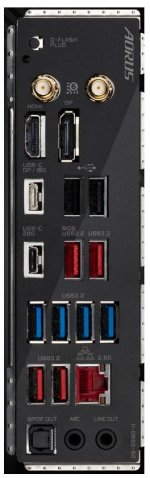
the 2 red beside the ethernet also dont work.
but the blue ports with usb work ... they are all on the same controller
This USB Mapping is so painful ^^
the 2 red beside the ethernet also dont work.
but the blue ports with usb work ... they are all on the same controller
This USB Mapping is so painful ^^
Attachments


I would make the following points:
Ports 11, 12 & 17 under the first USB Controller appear to be ‘Internal’ devices, either directly connected to the motherboard or via a USB header. So these ports should be set as ‘Internal’ with connector type (255). I am not positive about the two LianLi fans but the ITE device is definitely an internal device.
You don’t have a Bluetooth device showing, is that correct for your system?
Pay attention to the screen showing the Companion ports, as these are helpful when looking to correct and/or matching port types.
The two Red ports you can’t see may be attached to a USB 3.2 & 2.0 hub, which would mean they don’t show as individual ports. But the same port, such as port #5 & 10 under the first USB controller might keep being highlighted when a USB drive is inserted.
Ports 11, 12 & 17 under the first USB Controller appear to be ‘Internal’ devices, either directly connected to the motherboard or via a USB header. So these ports should be set as ‘Internal’ with connector type (255). I am not positive about the two LianLi fans but the ITE device is definitely an internal device.
You don’t have a Bluetooth device showing, is that correct for your system?
Pay attention to the screen showing the Companion ports, as these are helpful when looking to correct and/or matching port types.
The two Red ports you can’t see may be attached to a USB 3.2 & 2.0 hub, which would mean they don’t show as individual ports. But the same port, such as port #5 & 10 under the first USB controller might keep being highlighted when a USB drive is inserted.
i disabled LAN / WIFI / Bluetooth
USB front header also Internal ?
By the way i saw XH00 XHC1 so all rename to XSTA is that ok ?
USBTmap -> is all about XH00, XHC0, XHC1, XHC2 <- thats are my 4 controller...
should i change in UTBmap.kext ?
"Ports 11, 12 & 17 under the first USB Controller appear to be ‘Internal’ devices, either directly connected to the motherboard or via a USB header. So these ports should be set as ‘Internal’ with connector type (255). I am not positive about the two LianLi fans but the ITE device is definitely an internal device."
That i have fixed.
"The two Red ports you can’t see may be attached to a USB 3.2 & 2.0 hub, which would mean they don’t show as individual ports. But the same port, such as port #5 & 10 under the first USB controller might keep being highlighted when a USB drive is inserted."
I try, no reaction. Just 1 short light from the USB, nothing happens.
Red Ports Behind beside Ethenet, Blue Ports behind
the Blue Ports Behind work. Testet
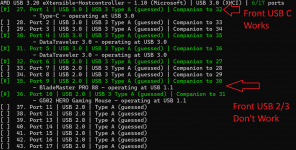
USB front header also Internal ?
By the way i saw XH00 XHC1 so all rename to XSTA is that ok ?
USBTmap -> is all about XH00, XHC0, XHC1, XHC2 <- thats are my 4 controller...
should i change in UTBmap.kext ?
"Ports 11, 12 & 17 under the first USB Controller appear to be ‘Internal’ devices, either directly connected to the motherboard or via a USB header. So these ports should be set as ‘Internal’ with connector type (255). I am not positive about the two LianLi fans but the ITE device is definitely an internal device."
That i have fixed.
"The two Red ports you can’t see may be attached to a USB 3.2 & 2.0 hub, which would mean they don’t show as individual ports. But the same port, such as port #5 & 10 under the first USB controller might keep being highlighted when a USB drive is inserted."
I try, no reaction. Just 1 short light from the USB, nothing happens.
Red Ports Behind beside Ethenet, Blue Ports behind
the Blue Ports Behind work. Testet
Last edited:
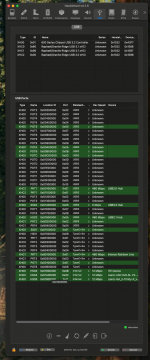
No, if you are talking about the USB3 or Type-C headers. They should be set to match the physical connector type, i.e. USB3 & Type-c with or without switch.USB front header also Internal ?
Just the devices connected to the USB2 header(s) along the bottom of the motherboard should be set as internal, i.e. case front USB2 physical ports with Back Tang, Usb card reader etc. Plus the built-in ITE, Bluetooth if enabled and any LED/Fan or CPU USB devices.
Port #27 and its companion port #32 both should be set as Type-c+switch (9).
Your motherboard only contains 2 x physical USB2 ports (both on the rear I/O plate with Black Tang). These are the only ports that should be set as USB2 (0) in your USB configuration. So you have way too many ports set incorrectly, even if they haven't yet been included in the port discovery.
You need to remember you are NOT limited to 15 ports. As your motherboard has 5 x USB controllers (but only 4 x controllers are active), your motherboard could in theory support and activate up to 60 x USB ports without exceeding the Apple USB port limit.
Sort the Hackintool > USB window by clicking on the top/name of the Location ID column. You may need to click on the name a couple of times so the sorted column matches the listing in the top window showing the 4 x controllers. This will sort the ports in to their respective controller groups, which will make it easier to see which ports are located under each controller.
The controllers with less than 15 ports can enable/activate all their ports, i.e. XHC1, XHC2 & one of the XH00 controllers. The only controller that contains more than 15 ports is the XH00 controller with the Location ID starting 0x01. This controller contains 17 x USB ports, so if all were discovered 2 x ports would need to be manually dropped from this controller, to keep within the 15 port limit.
omg that make so much sense ... like all cable usb is internal ... also my front usb C and front USB 3.0No, if you are talking about the USB3 or Type-C headers. They should be set to match the physical connector type, i.e. USB3 & Type-c with or without switch.
Just the devices connected to the USB2 header(s) along the bottom of the motherboard should be set as internal, i.e. case front USB2 physical ports with Back Tang, Usb card reader etc. Plus the built-in ITE, Bluetooth if enabled and any LED/Fan or CPU USB devices.
Port #27 and its companion port #32 both should be set as Type-c+switch (9).
Your motherboard only contains 2 x physical USB2 ports (both on the rear I/O plate with Black Tang). These are the only ports that should be set as USB2 (0) in your USB configuration. So you have way too many ports set incorrectly, even if they haven't yet been included in the port discovery.
You need to remember you are NOT limited to 15 ports. As your motherboard has 5 x USB controllers (but only 4 x controllers are active), your motherboard could in theory support and activate up to 60 x USB ports without exceeding the Apple USB port limit.
Sort the Hackintool > USB window by clicking on the top/name of the Location ID column. You may need to click on the name a couple of times so the sorted column matches the listing in the top window showing the 4 x controllers. This will sort the ports in to their respective controller groups, which will make it easier to see which ports are located under each controller.
The controllers with less than 15 ports can enable/activate all their ports, i.e. XHC1, XHC2 & one of the XH00 controllers. The only controller that contains more than 15 ports is the XH00 controller with the Location ID starting 0x01. This controller contains 17 x USB ports, so if all were discovered 2 x ports would need to be manually dropped from this controller, to keep within the 15 port limit.
Type C is like always with Switch ?
i will try USBMap Master
Attachments
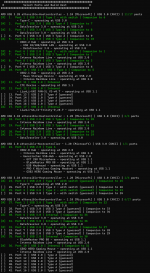
Last edited:
No, Type-C is not always with switch (9).
There is a second Type-C connector type, Type-C without switch that uses (10) to set the type.
The way to tell them apart is by inserting a Type-C device in to an external port, check which port is highlighted in the discovery screen, remove the device and flip it 180° and then reinsert the device in to the same external port.
If the same port is highlighted then it is a Type-c+sw (9) port.
If a different port is highlighted then it is a Type-c port, without switch (10).
Each Type-C with switch physical port will have one virtual USB2 port, there will be two virtual USB2 ports for the without switch. Flipping the device and reinserting it in to the same physical port will show which ports can be activated.
There is a second Type-C connector type, Type-C without switch that uses (10) to set the type.
The way to tell them apart is by inserting a Type-C device in to an external port, check which port is highlighted in the discovery screen, remove the device and flip it 180° and then reinsert the device in to the same external port.
If the same port is highlighted then it is a Type-c+sw (9) port.
If a different port is highlighted then it is a Type-c port, without switch (10).
Each Type-C with switch physical port will have one virtual USB2 port, there will be two virtual USB2 ports for the without switch. Flipping the device and reinserting it in to the same physical port will show which ports can be activated.

I've now tried the black rear USB 2.0 ports + internal and front ports.
Unfortunately, this didn't work either.
The front ports simply won't work.
My idea is to install Catalina and do the port mapping there so I can install the USBInjectAll kext for "simple" port mapping, making it native.
I also have another question. Should I enable native port mapping for the port mapping?
What about Bind USB ports?
The mapping process is very tedious.
Unfortunately, this didn't work either.
The front ports simply won't work.
My idea is to install Catalina and do the port mapping there so I can install the USBInjectAll kext for "simple" port mapping, making it native.
I also have another question. Should I enable native port mapping for the port mapping?
What about Bind USB ports?
The mapping process is very tedious.
USBInjectAll.kext doesn’t work with AMD systems. It is only configured to work with Intel USB controllers, so don’t rely on it when you’re creating your custom USB kext.
As you have macOS installed you should use Corpnewt’s USBMap script, which doesn’t need or rely on any third party kexts etc. when used.
Yes, the USB port discovery phase is tedious and boring, but if you want your Hack to work correctly and consistently it is an essential part of the process.
You don’t need to install Catalina to get a USBMap. You can undertake the discovery and activation process in whichever version of macOS you are currently using. It is exactly the same process no matter which version you are using since Mojave. Mojave and earlier require a different kext for the USB mapping to work. As Apple changed the USB setup in Catalina and have kept it like that till releasing Tahoe, which added another way of looking at/for the port number and type.
As you have macOS installed you should use Corpnewt’s USBMap script, which doesn’t need or rely on any third party kexts etc. when used.
Yes, the USB port discovery phase is tedious and boring, but if you want your Hack to work correctly and consistently it is an essential part of the process.
You don’t need to install Catalina to get a USBMap. You can undertake the discovery and activation process in whichever version of macOS you are currently using. It is exactly the same process no matter which version you are using since Mojave. Mojave and earlier require a different kext for the USB mapping to work. As Apple changed the USB setup in Catalina and have kept it like that till releasing Tahoe, which added another way of looking at/for the port number and type.


By the way is it possible to upgrade Bios ?
I'm at F 38
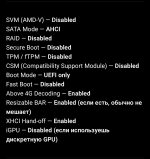
Mein Bios Settings:
which Tahoe Setup makes some problem i can instant a Error then:
After 10 Secounds Konsole Terminal
OCB Start Image Failed
something like that ...
i read about some boot args
I'm at F 38
Mein Bios Settings:
which Tahoe Setup makes some problem i can instant a Error then:
After 10 Secounds Konsole Terminal
OCB Start Image Failed
something like that ...
i read about some boot args
If you update the Bios, then you need to make sure the new DSDT.aml is patched to match your current one.
TPM doesn’t need to be Disabled.
Resizable Bar doesn’t need to be Enabled.
The only boot argument you have to use is ‘agdpmod=pikera’ for your RX 6800 dGPU to work with WhateverGreen.kext.
Any others are by choice or because a specific component requires help to work in macOS, such as an Intel 2.5G Ethernet port, it may need ‘e=1000’ boot argument to work with AppleIGC.kext.
Your Samsung 9100 NVME drive isn’t compatible with macOS, best remove it and see if it is causing problems, even if it is used for Windows or to host a Linux OS.
TPM doesn’t need to be Disabled.
Resizable Bar doesn’t need to be Enabled.
The only boot argument you have to use is ‘agdpmod=pikera’ for your RX 6800 dGPU to work with WhateverGreen.kext.
Any others are by choice or because a specific component requires help to work in macOS, such as an Intel 2.5G Ethernet port, it may need ‘e=1000’ boot argument to work with AppleIGC.kext.
Your Samsung 9100 NVME drive isn’t compatible with macOS, best remove it and see if it is causing problems, even if it is used for Windows or to host a Linux OS.
Samsung 9100 NVME got it already work it ... in sequoia 
But maybe better i but it in an external device ... ?
had a remote services
he probably didn't know either.
Now I'll probably try it out myself again.
He didn't even know about the USB mappings aswell >.<
But maybe better i but it in an external device ... ?
had a remote services
he probably didn't know either.
Now I'll probably try it out myself again.
He didn't even know about the USB mappings aswell >.<
Last edited:
While the Samsung drive will work, it will eventually throw up some issues due to the incompatible NVME Controller used by the manufacturer. Pretty much every Gen 5 NVME drive is in the same boat, i.e. none are compatible with macOS.
Might make some difference if the Samsung drive is in an external enclosure, as that will be using a different protocol, i.e. USB or Thunderbolt, compared to being installed in one of the motherboard's M.2 connectors.
Hope you aren't paying good money for the remote service, if he doesn't know about USB mapping and it's importance to a Hackintosh system.
Might make some difference if the Samsung drive is in an external enclosure, as that will be using a different protocol, i.e. USB or Thunderbolt, compared to being installed in one of the motherboard's M.2 connectors.
Hope you aren't paying good money for the remote service, if he doesn't know about USB mapping and it's importance to a Hackintosh system.
I dont get freezes or any problem with my Samsung 9100 Pro.
When i get some random freezes i will put it out

F39 Bios was last Version.
28.01-11.03 was in Holiday ;-)
so i just go for other USB Mapping like before. i Took your ACPI with DSDT patched.
keepsyms=1 debug=0x100 agdpmod=pikera alcid=1 igfxonln=1 alcdelay=1000 log_buf_len=8388608
i also dont know SMBIOS should i select MacPro 7,1 or iMAC Pro 1,1 ?
When i get some random freezes i will put it out
F39 Bios was last Version.
28.01-11.03 was in Holiday ;-)
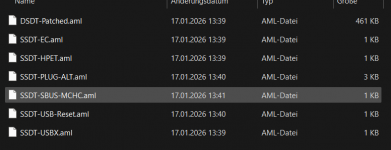
OK, I have attached a copy of the Results folder from SSDTTime having used the OEM folder you provided to generate these custom SSDT's and associated ACPI patches.
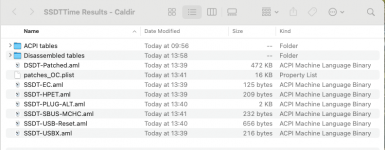 Contents of Results folder
I would recommend you do the following:
Contents of Results folderI would recommend you do the following:
- Create a copy of your current working EFI folder on a spare USB pen drive.
- Remove any existing SSDT's and ACPI patches from your current setup (on the USB pen drive).
- Add the custom SSDT's and patched DSDT table to the ACPI folder.
- Add the ACPI patches contained in the patches_OC.plist to your config.plist
so i just go for other USB Mapping like before. i Took your ACPI with DSDT patched.
Recommended Kext Order for AMD Zen 5 (9950X)
On high-end AMD systems, the loading order is vital for stability, especially regarding the 16-core power management and the interaction between VirtualSMC and its plugins.The Optimized Order:
- Lilu.kext
- The foundation. Must always be #1.
- VirtualSMC.kext
- Core emulator. Needs to load before any sensors or plugins.
- Phantom.kext
- Crucial for users dual-booting with Riot Vanguard (League of Legends/Valorant) to manage hardware identity/TPM states.
- SMCProcessorAMD.kext
- Provides CPU temp monitoring for Ryzen. Must load after VirtualSMC.
- AppleMCEReporterDisabler.kext
- Critical for AMD high-core count CPUs (like the 9950X) to prevent Kernel Panics during boot.
- WhateverGreen.kext
- Essential for GPU power management and framebuffers on the RX 6800.
- AppleALC.kext
- Audio driver for the onboard Realtek codec.
- NVMeFix.kext
- Recommended for PCIe 4.0/5.0 NVMe drives on X670E to ensure proper power states.
- RestrictEvents.kext
- Essential for Ryzen to fix the "About this Mac" CPU string and memory UI warnings.
- USBToolBox.kext
- The driver base for your USB mapping.
- UTBMap.kext
- Your specific port map. Must load after USBToolBox.kext.
- FeatureUnlock.kext(Optional)
- Only keep this if you need Sidecar, AirPlay to Mac, or NightShift on unsupported SMBIOS.
keepsyms=1 debug=0x100 agdpmod=pikera alcid=1 igfxonln=1 alcdelay=1000 log_buf_len=8388608
i also dont know SMBIOS should i select MacPro 7,1 or iMAC Pro 1,1 ?
Attachments
Last edited: